
The Midterms Looked Sudden. They Took a Decade.
By Nadir Ahmad, CEO at Dowling Street
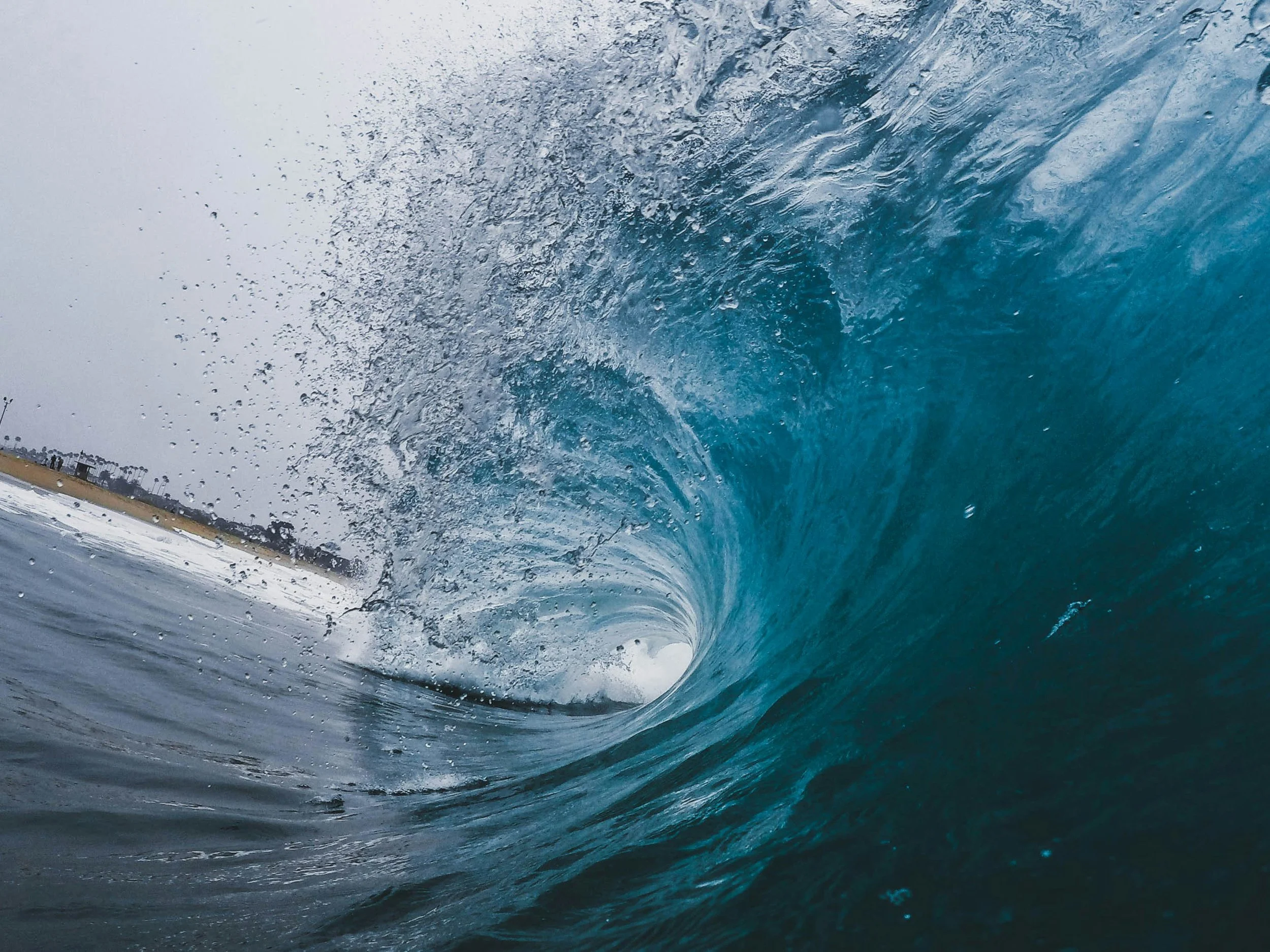
Democrats won both chambers last Tuesday, and the coverage has settled on a single word: tsunami. This is not a piece about who won. There is more than enough commentary on that. It is about what the result tells us, and about the thing almost nobody is saying: it wasn't sudden. It was ten years in the making.
What the Results Say
I've spent the week listening to people try to make sense of last Tuesday, and what struck me is how many different answers I heard. Some pointed to money, some to character, some to exhaustion. I think they're all describing the same thing from different angles. Two things were accumulating at once: the money pressure people felt in daily life, and a hunger for politics conducted with more decency. The data points to both.
In the AP Voter Poll, the economy was voters' top issue, followed by the state of democracy, and CBS exit polling showed the same order. Nine New York Times opinion writers, including a conservative fellow at the Heritage Foundation, pointed variously to tariffs, gas prices and the war with Iran. One called the result "the revenge of the material." Only one credited decency.
Material strain opened the door. What walked through it is the part I find most interesting. In his victory speech, Texas Senate winner James Talarico said a politics of division is "no match for a politics of love." I hear in that line an appetite for a public life that treats people as fellow citizens rather than opponents.
Neither of those arrived in a night. Prices climb a month at a time. Weariness with how we treat one another builds a conversation at a time.
But the question underneath is why none of this felt like it was coming.
Why It Felt Sudden
A tsunami comes from nowhere. This didn't. It felt sudden because we were watching the night instead of the work.
Look at Georgia in 2020. Black women organizers, including Stacey Abrams, LaTosha Brown and Nsé Ufot, are widely credited with helping flip the state, after years of registration drives at churches and community events and door knocking in Black and Latino neighborhoods. Brown pointed to near-misses elsewhere in the South, where winning once seemed impossible, and said, "something is changing." Ufot put it this way: if demographic shifts are the fire, "organizing is the accelerant." That wasn't an instant shift in mood. It was the output of years of work, and almost none of it was visible while it was happening. The flip is what everyone remembers. The years behind it are the part we missed.
We remember the boil and forget the heating.
Water doesn't decide to boil. It spends a long, unremarkable stretch getting warmer while nothing visible happens. Treat the boil as the event and you pay twice: you get blindsided, and you credit whatever happened that day. Prices and the war may have been the last turn of the dial, but the water had been heating for years. For most of us, 2016 is where this road began, and last Tuesday was the visible end of the decade that followed.
If you believe this was a wave, you expect it to recede, and you spend your energy waiting for the next one. If you see an accumulation, you ask better questions: what is still heating, who is tending it, and what am I doing about it?
The Tsunami Hiding in Your Organization
I don't think this is only a story about a country. Every organization I know has its own tsunami waiting, a resignation wave or a quiet collapse of trust that will look sudden when it arrives. The question is whether we are watching the water heat. Three habits help.
Watch the accumulation, not the event. Keep a running list of small signals: a team that has quietly stopped volunteering ideas, a customer comment that keeps recurring. One is noise. A dozen is the water heating. Once a month, read the list back and ask what you would see if every item kept growing.
Give meaning time. Signals arrive before meaning does. Any election night shows it: the numbers come in long before anyone can say what they mean. When something big lands, resist declaring what it means for 48 hours, and say out loud that interpretation is still underway. Use those 48 hours to ask what you don't yet know, and who is closest to the answer.
Credit those doing the work. People doing patient, local work rarely get the visible win. Find them on purpose, and check that what you reward isn't only what is easy to see. The best work is often invisible by design: a crisis that never arrives leaves nothing to celebrate. Ask who is preventing problems you will never see.
And a test for your next "overnight" surprise: What was I not watching? Who was watching it? What would I have needed to notice sooner?
The Morning After, and the Years Before
In 2016, I spent election night hand-tallying results at a watch party, because I'm that kind of nerd. I had every number and no idea what they meant. Even when Trump took the stage in the small hours, it hadn't sunk in. That took months. In 2020, while crowds celebrated in the streets, I stayed in my apartment. It wasn't mourning or sorrow, but it was an emotional moment, especially for the people on the right who had put country above party. This year I watched the first few hours of results, fell asleep, and woke to the result. What I felt was contained relief, along with some bemusement at how fast "blue wave" had been inflated into "blue tsunami."
I've been thinking more and more about last Wednesday; the morning after election day. When you go to bed in doubt and wake up in certainty, it's easy to say something changed overnight. It didn't.
That is where I find my optimism, and it has little to do with who won. The last ten years were hard on a lot of people, and it is tempting to remember only the noise. But underneath it, people kept showing up: registering voters, knocking on doors, gathering at churches and community events. If what looked like a tsunami was really a decade of that work finally coming into view, then the work happening right now, in places most of us aren't watching, is the next result.
Look closely for the quiet work happening right now.
Sources:
Associated Press. 2026. AP Voter Poll: The economy and the state of democracy are voters' top issues. PBS News. https://www.pbs.org/newshour/politics/ap-voter-poll-the-economy-and-the-state-of-democracy-are-voters-top-issues.
CBS News. 2026. See CBS News exit poll results for the 2026 midterm elections. https://www.cbsnews.com/news/cbs-news-exit-polls-midterm-elections-2026/.
CNN. 2020. Black women helped push Democrats to the finish line in Georgia. Here's how they can do it again. KVIA. https://kvia.com/politics/2020/11/21/black-women-helped-push-democrats-to-the-finish-line-in-georgia-heres-how-they-can-do-it-again/.
Cortese, Amy. 2021. Agents of Impact: Georgia's organizers. ImpactAlpha. https://impactalpha.com/agents-of-impact-georgias-organizers/.
Marie Claire. 2020. LaTosha Brown Says a New South Is Rising. https://marieclaire.com/politics/a34621522/latosha-brown-black-voters-matter-interview-2020.
New York Times Opinion. 2026. 'Decency Won': 9 Writers on the Best and Worst Moments From Trump's Midterm Rout. https://www.nytimes.com/2026/11/04/opinion/midterms-democrats-senate-house-results.html.
Newsweek. 2026. What the midterm election results mean for the future of Democrats. https://www.newsweek.com/what-the-midterm-election-results-mean-for-the-future-of-democrats-12652831.
The Tribune (ANI). 2026. 'We just took back Texas,' says Democrat James Talarico in victory speech. https://www.tribuneindia.com/news/usa-news/we-just-took-back-texas-says-democrat-james-talarico-in-victory-speech/.